Introduction
Choosing the right pants can make a big difference to your outdoor experience. Whether you're planning a Himalayan trek, exploring a forest trail, or heading to the gym, your clothing should match your activity.
Trekking pants, hiking pants, and track pants may look similar, but they differ in their design, fabric, and intended use.
In this guide, we'll compare trekking pants vs hiking pants vs track pants to help you choose the right option for your next adventure.
1. What Are Trekking Pants?
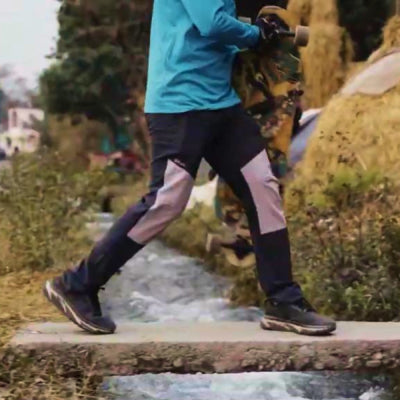
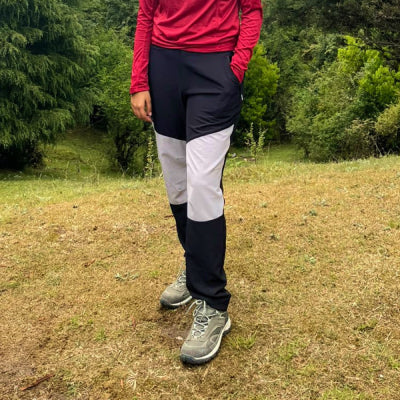
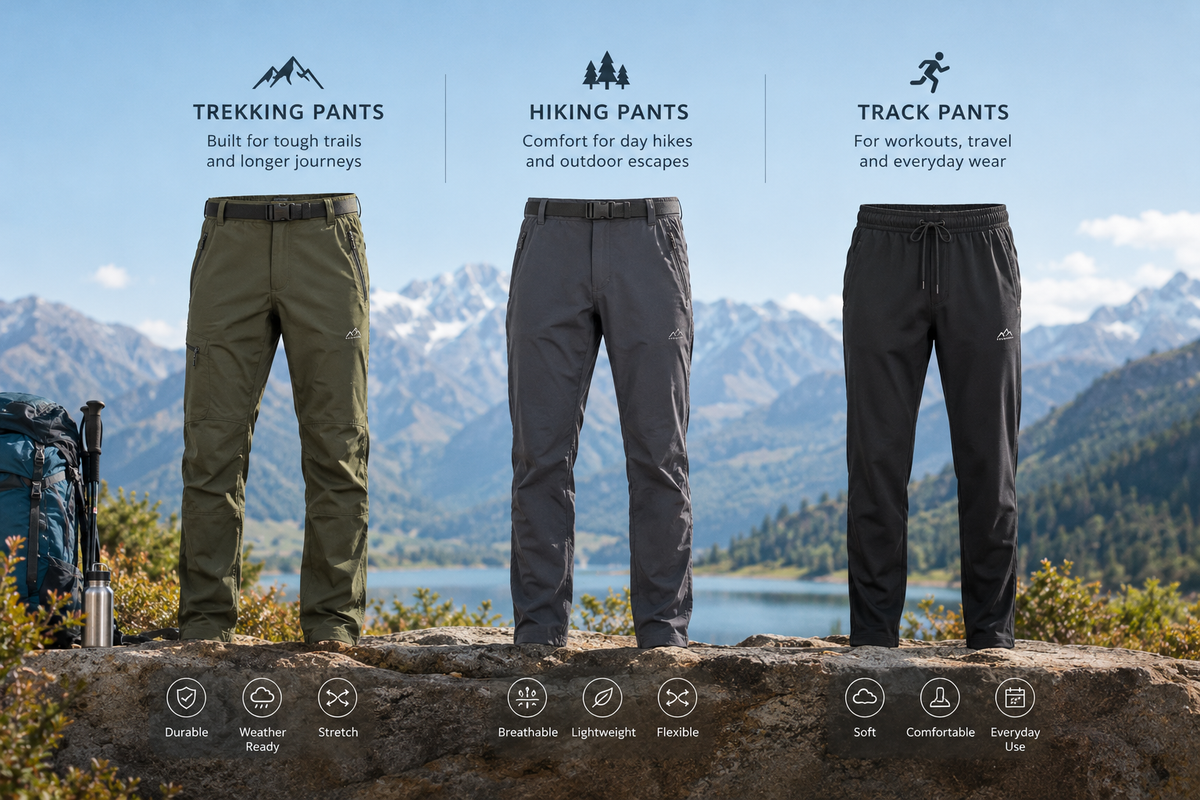
Trekking pants are designed for long-distance walks, mountain trails, and multi-day outdoor adventures. They typically prioritise mobility, durability, and comfort across changing conditions.
Key features:
- Lightweight, durable fabrics.
- Stretch for easier movement.
- Quick-drying materials in many designs.
- Practical pockets and comfortable fits.
- Options suited to different weather conditions.
Best for: Himalayan treks, multi-day hikes, mountain trails, and outdoor travel.
2. What Are Hiking Pants?
Hiking pants are designed for walking trails, day hikes, and recreational outdoor activities. They often focus on comfort, breathability, and freedom of movement.
Key features:
- Comfortable and flexible construction.
- Lightweight fabrics for active movement.
- Breathable or quick-drying options.
- Designs suited to different trail conditions.
Best for: Day hikes, nature walks, local trails, and weekend outdoor adventures.
Note: Trekking pants and hiking pants often overlap. The difference depends more on the specific garment's features than its name.
3. What Are Track Pants?
Track pants are generally designed for sports, workouts, warm-ups, and casual everyday wear. Depending on the material, they may offer softness, stretch, or warmth.
Key features:
- Relaxed or athletic fits.
- Soft knitted or synthetic fabrics.
- Comfortable waistbands.
- Suitable for workouts and casual use.
Best for: Gym sessions, running warm-ups, travel, lounging, and everyday activities.
Track pants can work for easy walks, but not every pair is suitable for demanding trails or wet conditions.
4. Trekking Pants vs Hiking Pants vs Track Pants
Here's a quick comparison to help you decide.
|
Feature |
Trekking Pants |
Hiking Pants |
Track Pants |
|---|---|---|---|
|
Multi-day treks |
Day hikes and trails |
Sports and casual wear |
|
Often designed for rugged use |
Depends on the design |
Varies by fabric |
|
Usually important |
Usually important |
Usually comfortable |
|
Common in technical styles |
Available in many styles |
Depends on material |
|
Depends on construction |
Depends on construction |
Often limited |
|
May offer abrasion resistance |
Varies by design |
Not usually trail-focused |
|
Mountains and demanding trails |
Hiking and outdoor walks |
Gym and everyday wear |
Which is the best choice?
- Choose trekking pants for demanding trails and multi-day adventures.
- Choose hiking pants for day hikes and recreational trails.
- Choose track pants for workouts, casual wear, and everyday comfort.
5. How to Choose the Right Pants
Before buying outdoor pants, consider these factors.
- Fabric
Look for lightweight, breathable, and durable materials suited to your activity. Quick-drying fabrics can be particularly useful on longer treks.
- Fit and Flexibility
Choose a fit that allows you to climb, bend, and walk comfortably without restricting movement.
- Weather Conditions
For cold-weather trekking, consider layering thermal wear underneath suitable pants. For warm conditions, prioritise breathability and moisture management.
- Durability
Rugged trails may require more abrasion-resistant materials than city walks or gym sessions.
- Pockets and Practicality
Useful pockets and secure closures can make carrying small essentials easier during outdoor activities.
- Weight and Packability
Lightweight pants are useful when packing for multi-day adventures, particularly when you need to carry spare clothing.
6. Common Mistakes to Avoid
Avoid these common buying mistakes when choosing trekking or hiking pants:
- Choosing style over functionality.
- Ignoring fabric breathability and drying time.
- Buying a fit that restricts movement.
- Assuming all track pants are suitable for trekking.
- Ignoring seasonal layering requirements.
- Overlooking the care instructions and durability of the fabric.
The right pair should suit your activity, weather conditions, and comfort preferences.
Final Thoughts
Trekking pants, hiking pants, and track pants each serve a different purpose. While they may look similar, their construction and features can affect comfort and performance.
For challenging mountain trails and extended adventures, trekking pants with suitable stretch, durability, and moisture management are often a practical choice. Hiking pants work well for everyday trails, while track pants are ideal for workouts and casual comfort.
Before your next adventure, explore Gokyo's trekking and outdoor clothing collection to find pants that suit your activity, climate, and personal preferences.
The best pair isn't necessarily the most expensive one. It's the pair that helps you move comfortably and confidently wherever your journey takes you.
View Next Blog: →
 Nepal Trekking in October: What Changes After the Monsoon?